


A fireside
Once a month, online, up to 25 people in a circle. No slides, no recording. Bring the situation you’re stuck on. Invitations go out in batches.
 The pledge
The WISE Manifesto
If you see it too, take the pledge. I need to know you're out there.

The problem
Somewhere in the middle of the building, everyone already knows which decision nobody owns.
We have never known more about how our organizations run. And we run them as if we know nothing.
I've sat in that room more times than I want to admit. I've been the one who didn't say it, and I remember the drive home.
The shift
From control to coherence. From ownership to stewardship.
Peter Drucker coined the knowledge worker, whose edge was knowing more than everyone else. That edge is going.
What's left is what we've been quietly giving away:
Living things evolve in circles.
The machine in the room already knows more than anyone at the table. Me included.
It won't come back on a straight line from kickoff to go-live. Living things evolve in circles. I want people who can read the second and third order effects, and who still care.
What a WISE worker does
What holds an organization together through a big technology change is Human Infrastructure. It belongs in the budget before the first line of code. WISE is a compass and a map for the old and the new. It's how you know whether what holds is actually holding.
Built on very old things, for very new terrain. Nonaka and Takeuchi named the wise company. WISE makes it something you can build, not just admire.
Somewhere in the middle of the building, everyone already knows which decision nobody owns.
Change doesn’t trickle down or bubble up. It ripples outward.
If you believe this too, you’re already one of us. The pledge just makes it count.
Make it countWhy now
The world’s collective response remains profoundly out of step with what is known.
A Time of Great Consequence, a manifesto by the Club of Rome, UNESCO-MOST BRIDGES and Arizona State University, September 2026
Swap the planet for a company and it’s the same gap.
That’s a manifesto about the whole planet. I read it with a lump in my throat, because it’s every steering committee I’ve ever sat in, at planetary scale.
We have never known more about how our organizations run, and we run them as if we know nothing.
Better tools won’t fix this. We have to become better humans. That scares me, because it includes me. And we don’t have ten years. The AI is going live now, with or without us.
More of the argument
In the architecture, every one of those has an answer. In the organization, almost none of them do.
In tech, we build headless systems on purpose. Every piece does one job and talks to the rest through a clear contract: who sends what, who answers, who’s accountable when it breaks. It’s elegant. It works.
Then we did the same thing to the humans. Decoupled everyone. Teams, roles, now agents, each in its own box, all talking to each other through a tool.
And nobody wrote the contracts.
Who decides. Who’s allowed to say no. Who holds the memory. Who catches it when the handoff breaks. In the architecture, every one of those has an answer. In the organization, almost none of them do.
We gave the machines contracts. We gave the humans a chat channel.
This isn’t the middle against the top. Both floors are missing the same contracts.
We treat judgment like a memo: written at the top, cascaded down. That's not where it lives.
In one company the executive described a healthy program, and the person closest to execution described a very different one. Same building, same week. Nobody was lying.
That gap is where the money leaks out. And our answer? More process, more dashboards, now more AI. Which mostly makes the gap faster.
A word from Barbara
The pledge
A WISE worker is not a title. It's five things you do on a Monday. None of them heroic.
Tick the ones you’ll do. At least one.
0 of 5
Everyone carrying this thinks they're the only one. Taking the pledge says: I see it too, count me.
If you're the one who signs the checks: this is for you too. The top floor is missing the same contracts, and you can't write them alone either.
You don't become wise by signing a page. You take a first step onto a path, and the path is the point. WISE isn't a verdict on you. It's four things you practice, and you can start on Monday.
The signal wall
Be one of the first to sign.
The wall opens once 50 people have signed. Until then, every signature is counted quietly.
Take the pledgeWhat you get back
Once a month, online, up to 25 people in a circle. No slides, no recording. Bring the situation you’re stuck on. Invitations go out in batches.
Anyone can take the free pulse check, the Complexity Load Mirror, then bring the team and see how far apart your answers are.
Every quarter, the patterns the people who signed are seeing, handed back to you. Never anyone's scores or company.
What I don't promise: a personal reply to everyone, one-to-one calls, or free interpretation of your results. The pledge is a stance, not a certification.
Where this comes from
Last year it finally got a stage, at the Global Peter Drucker Forum, where I spoke about building ecosystems and the human infrastructure that holds them together. WISE grew out of that talk.
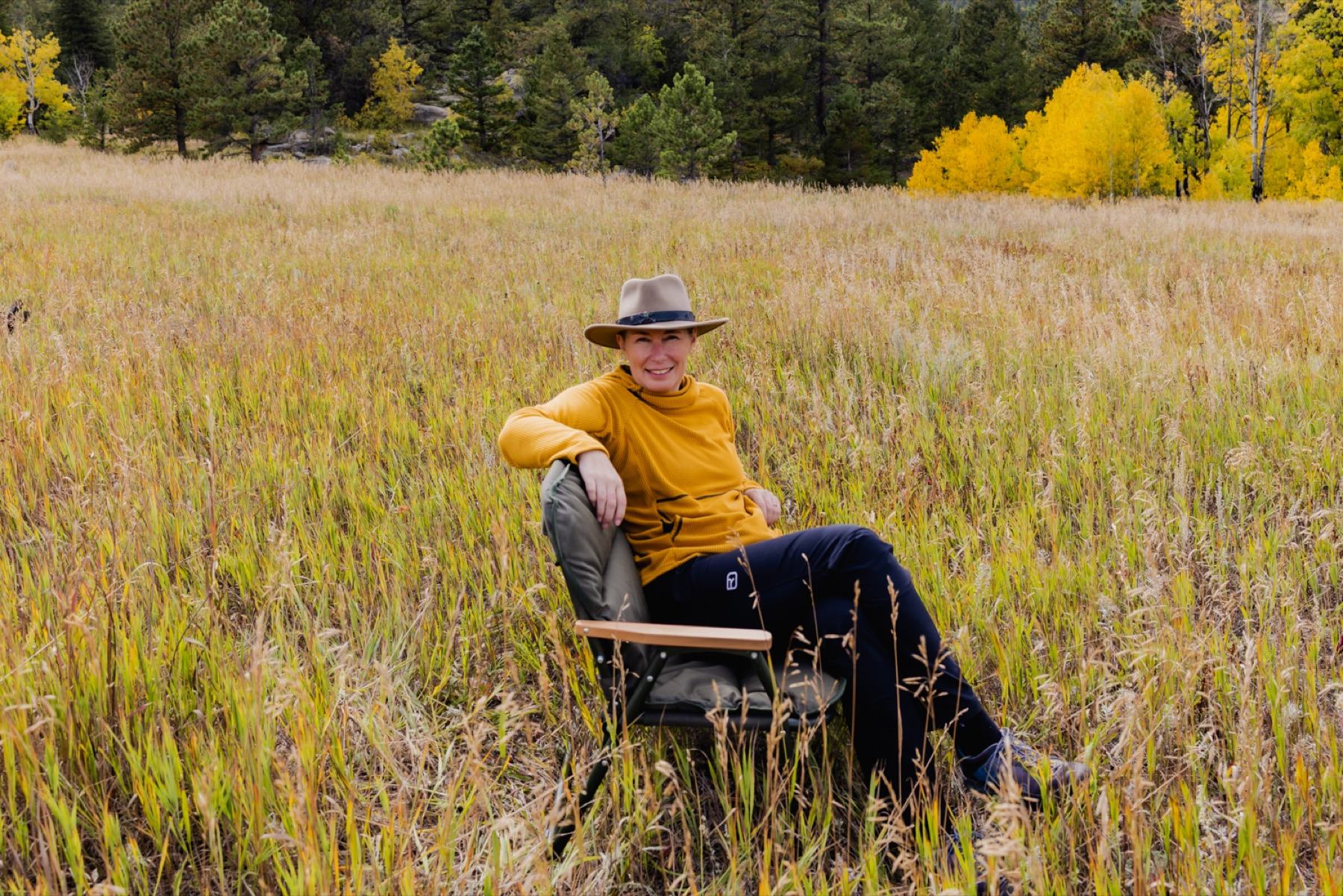
Several weeks a year I guided groups into the Colorado wilderness as a rites of passage guide. The rest of the year I rescued broken tech transformations.
It became a book, first published in Germany in 2012; the US edition, Meetings in Moccasins, came out in June 2015. One of the people I interviewed for it was a member of the German Association for the Club of Rome. Reading their manifesto fourteen years later felt like a circle quietly closing.
The dream further out: a place in the Colorado foothills where the old and the new sit at the same fire. I want to build it with the people who sign.